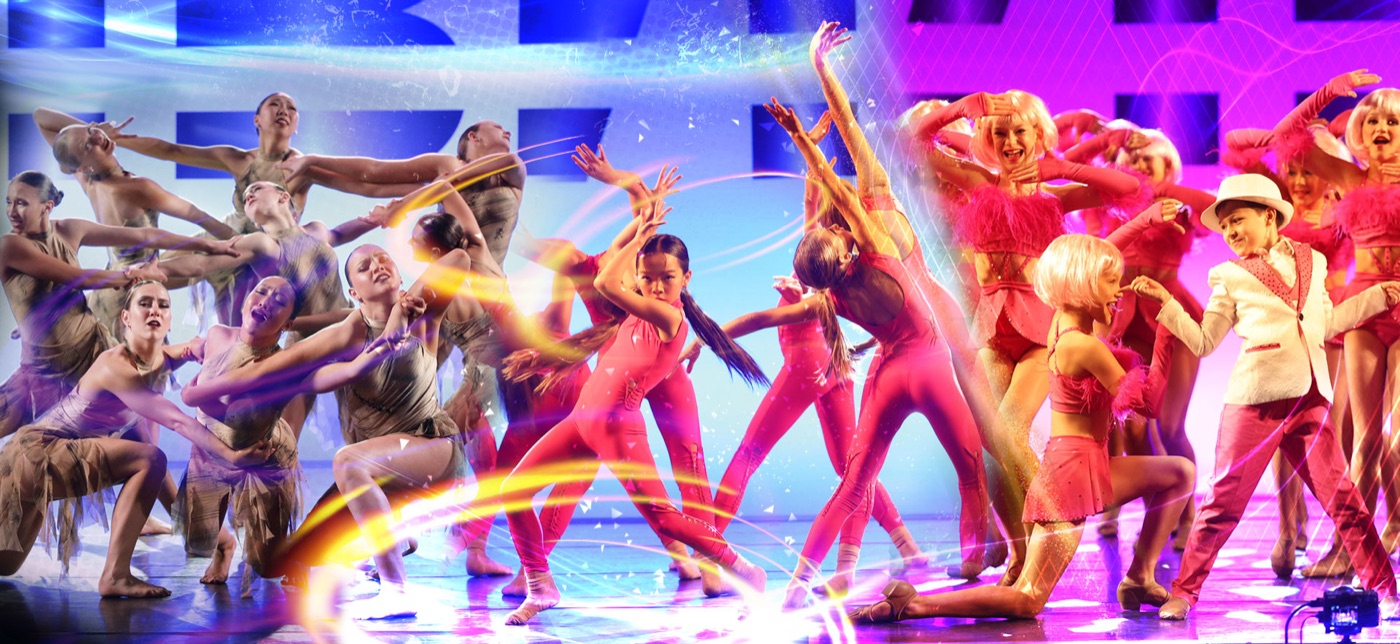
Hollywood Vibe
Competition
Judged by the people who do it for a living.
Judged by the people who do it for a living.
Hollywood Vibe competition is judged by our faculty — working choreographers and dancers from Los Angeles who set the industry standard. Every routine receives a digital score sheet with constructive comments from every judge.
Every dancer is recognized at the awards ceremony. Soloists receive score laminates and Hollywood Vibe lapel pins. Cash prizes and specialty awards are presented across every age division — competition that teaches, not just ranks.
Convention registration is required to compete. All competition entries must be tied to an active convention registration for the same weekend. View convention details →
Per dancer, per routine. Time limits include a 15-second grace period — see Time Limits below.
Late fees apply when payment is made less than 30 days before the event: $25 per solo; $5 per dancer for duo/trio and group entries.
Studio owners and teachers: contact us to confirm pricing and available discounts.
A $50 non-refundable deposit is required for each competition entry at registration. Deposits are not transferable. If your finalized entry count falls more than 10% below what you reserved, unused deposits are forfeited. This helps us hold space for as many studios as possible.
Independent dancers must register through a studio account with a valid teacher on file. Priority is given to registered studios with groups in attendance.
Total acts per studio location, including solos
Maximum solo entries per dancer
+5 additional competition acts
+10 additional competition acts
+20 additional competition acts
Contact us for additional act allocations
Ages are calculated as of January 1, 2026.
Groups averaging 19 and older, or teachers and professionals competing together.
To determine a routine's age division:
Proof of age may be requested if an entry is contested.
Routines scoring Gold or higher qualify for the 2026 National Finals.
Scoring ScaleOur judges are members of the Hollywood Vibe faculty — working choreographers and adjudicators with regional and national experience. Each panel includes three judges, including one dedicated Teacher Judge who provides a separate critique geared toward studio owners and directors.
If a judge choreographed a routine on the panel, that judge's score is replaced by the head or teacher judge.
Time LimitsA 15-second grace period applies to every routine. After that, one point is deducted for each second over time. Routines that exceed the limit may be judged for adjudication only.
Outstanding Choreography · Most Entertaining · Best Costume · Best Direction · Overall High Score Solo · Overall High Score Duo/Trio · Overall High Score Groups — awarded in each age division. Award amounts vary by division size. You must be contested to receive an Overall High Score award and cash prize.
1st through 3rd place trophies are awarded when five or more entries compete in a category. Categories with fewer than five entries receive a 1st place trophy only. Uncontested routines must score Gold or higher to receive a 1st place trophy. Soloists also receive medals indicating their score.
Overall High Score: Top 3 placements are awarded with five or more entries; Top 5 with ten or more. Uncontested line and production routines may receive Overall High Score on a Vibe Award.
Regional Dancer of the Year: Awarded in Junior, Pre-Teen, Teen, and Senior levels based on workshop participation and competition performance. Independent dancers are not eligible at regionals. Learn about scholarships →
Categories other than Acro may contain no more than four acrobatic tricks or tumbling passes. Dancers may enter multiple categories but may not compete against themselves in the same age division, discipline, and category — they may age up to avoid a conflict. Duplicate entries are moved to adjudication only.
Primarily tap technique. Recorded tap sounds are not permitted.
Primarily jazz technique.
Classical ballet or pointe technique and movement.
Hip hop and street dance styles.
Jazz technique blended with funk and hip hop groove and attitude.
Song and dance, baton, pom, ethnic, ballroom, and other styles. Acro routines must be at least 50% acrobatic or gymnastic skills.
Character or song interpretation from Broadway, film, or musical theater.
A blend of jazz and ballet with emotional and storytelling elements.
Modern and ballet-based movement beyond standard jazz vocabulary.
Upload all music through the registration portal one week before the event. Accepted formats: .mp3, .m4a, or .aif. Bring backup on a phone, computer, or flash drive. If incorrect music plays, notify backstage immediately — routines cannot be performed again after 45 seconds.
Props are permitted and must be set within the routine time limit. Items must fit venue constraints and be liftable onto the stage. Please avoid water, powder, paint, or glass. Clear props promptly after your routine.
Primary stage: 40′ × 28′, 3′ height, marley floor, tap mics downstage. Second stage: typically 40′ × 24′ (36′ × 24′ in some ballrooms). Wing space varies by venue — contact us with questions.
Before you register
At the event
Ties are broken by technique, then overall impression, then judges' discussion. Directors may also resolve ties. More questions? See our FAQ or contact us.